
From August 20 to 22, the Ninth Tokyo International Conference on African Development (TICAD 9), led by the Government of Japan and co-organized with the United Nations, the United Nations Development Programme (UNDP), the World Bank, and the African Union Commission (AUC), was held at Pacifico Yokohama in Yokohama City. Approximately 50 African heads of state and government participated to discuss Africa’s development.
On August 20, a thematic official side event titled “Artificial Intelligence and Higher Education in Africa: Advancing Innovation for Sustainable Development,” hosted by the United Nations University (UNU), was held as part of TICAD 9. Vice President Atsufumi Yokoi of Okayama University, UNESCO Chairholder, was invited to participate as a keynote speaker and panelist.
The session was moderated by Ms. Hanan Fadlon, Consultant (Psychology and AI). Speakers included Professor Tshilidzi Marwala, Rector of the United Nations University and United Nations Under-Secretary-General; Professor Amr Adly, President of Egypt-Japan University of Science and Technology (E-JUST); and Dr. Philip Osano, Chair of the UNU-IAS Board. Following opening remarks by Professor Marwala and a video message from Stefania Giannini, UNESCO Assistant Director-General for Education, Vice President Yokoi delivered his keynote address.
Speaking from his position as UNESCO Chairholder accredited by UNESCO Headquarters, Vice President Yokoi emphasized that UNESCO has consistently led global efforts to establish ethical and inclusive AI frameworks. He reiterated UNESCO’s long-standing warning that “AI is not culturally neutral,” stressing that this issue is not merely technical but also relates to digital sovereignty and cultural justice. He also highlighted the importance of promoting language technologies developed by Africans for Africans, supported through international cooperation. In this context, he underscored the growing importance of higher education institutions and the need for strengthened university collaboration and human resource development between Japan and Africa.
In the panel discussion that followed, participants addressed opportunities and challenges related to AI adoption in African universities, strategies for ensuring equitable access to AI-based learning tools, and policy recommendations that support both national development priorities and planetary sustainability.
As a university hosting a UNESCO Chair in Education for Sustainable Development (ESD), Okayama University will continue to promote the “Okayama ESD” approach based on UNESCO’s “ESD for 2030” framework from the regional level to the global community, while contributing to the advancement of higher education through AI.
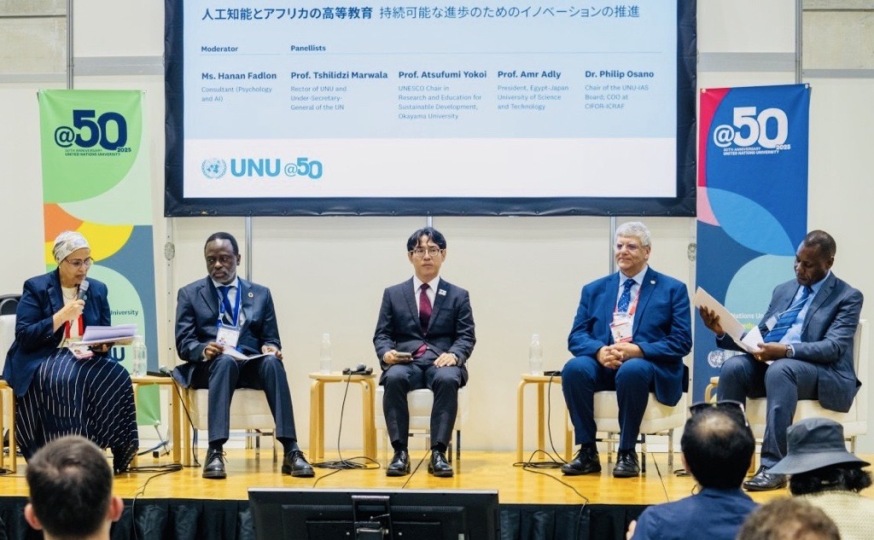
Panel session (from left): Ms. Fadlon, Professor Marwala, Vice President Yokoi, Professor Adly, and Dr. Osano
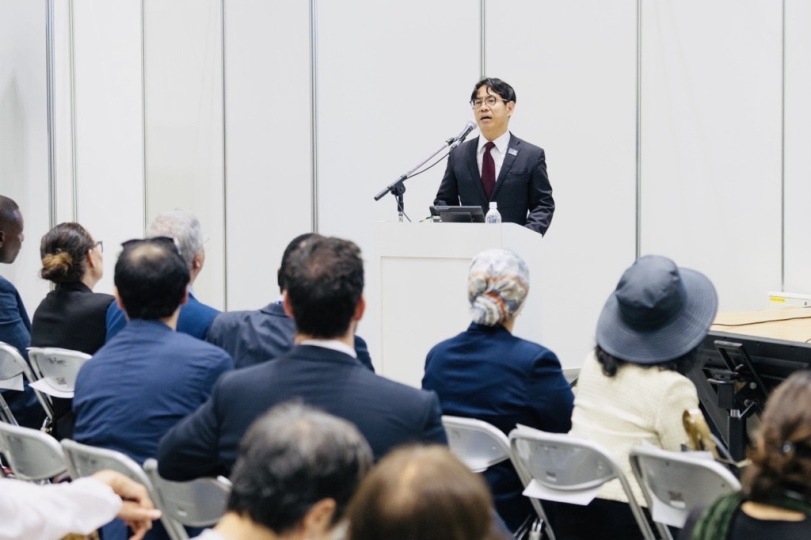
Vice President Yokoi delivering the keynote address
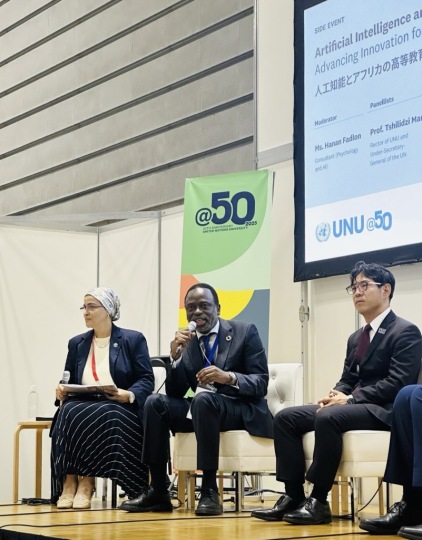
Opening remarks by Professor Marwala
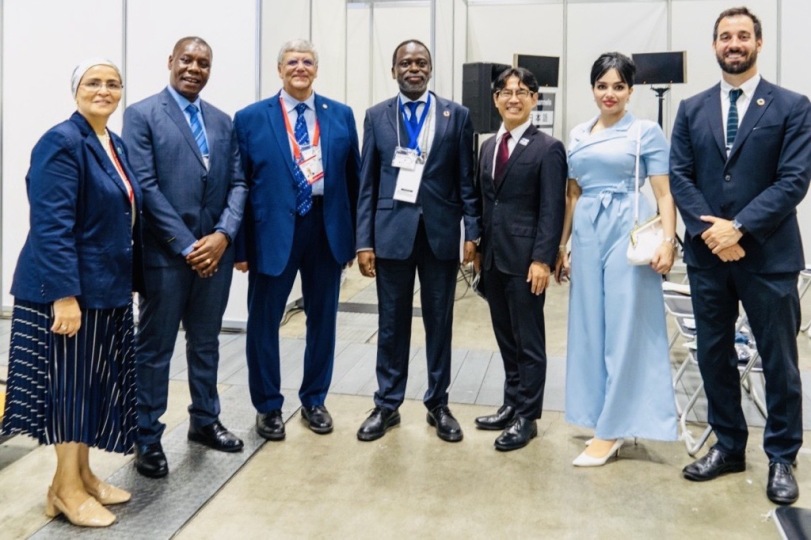
Group photo